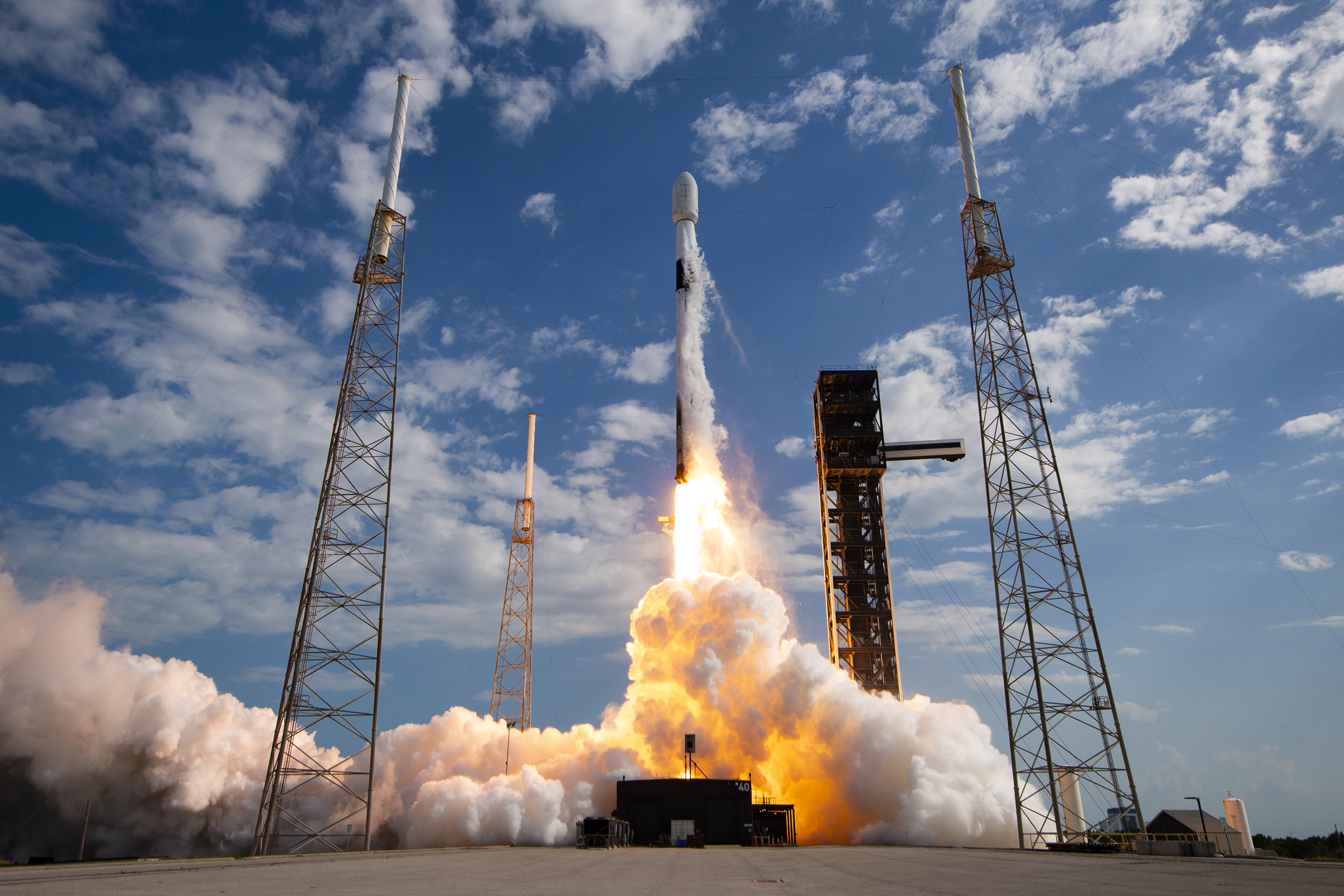
A Mission Robotic Vehicle carrying the Robotic Servicing of Geosynchronous Satellites payload launched from Cape Canaveral on July 21 aboard a SpaceX Falcon 9. The spacecraft is now beginning an electric-propulsion journey that DARPA says will take about a year to reach geosynchronous Earth orbit, roughly 22,000 miles above Earth.
The system uses two dexterous robotic arms developed through DARPA and the U.S. Naval Research Laboratory. Its planned work includes inspecting satellites, installing propulsion modules, supporting upgrades and relocating spacecraft. DARPA says the propulsion modules could extend a satellite's operating life by six years or more.
SpaceLogistics, a Northrop Grumman company, owns and will operate the integrated spacecraft. DARPA supplied the robotic payload, while NASA has contributed simulation, software-analysis and flight-operations expertise under an interagency agreement. DARPA plans initial on-orbit demonstrations before transferring program coordination to the U.S. Space Force.
The launch is a milestone, but it does not yet prove the servicing system will perform every planned task in orbit. The spacecraft must complete its transfer to geosynchronous orbit and pass demonstrations before the commercial service can be evaluated in operation.
Source: NASA — nasa.gov source ↗
Source: Defense Advanced Research Projects Agency — darpa.mil source ↗
Join the conversation.
No published comments yet. Share the first thoughtful response.
Share your view.
Comments are reviewed before publication. Keep the conversation relevant, civil, and focused on the reporting.